Category: Language

  • The Rapper as Comedian


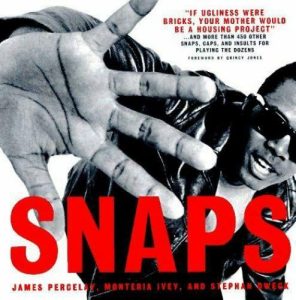
    Hip hop has long been a venue for laughter. Consider songs like Eminem’s “My Name Is” (“Dr. Dre, don’t just stand there, operate”) and Digital Underground’s “The Humpty Dance” (“I use a word that don’t mean nothing, like looptid”). But even songs that on the surface appear hard sparkle with puns and one-liners. The lyrical intermingling of menace and mirth may derive from a tradition in Black culture known as the Dozens, a game in which contestants trade snaps, aka yo’ mama jokes, hoping to both intimidate opponents and entertain onlookers.

    (more…)

  • Bothersome Prepositions

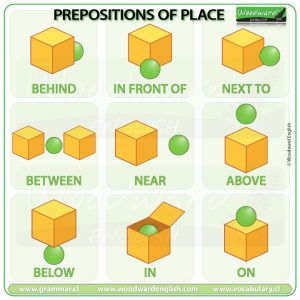
    People are weird with prepositions. Here’s a list of offenses that irk me. Granted, many are idiomatic and likely escape your definition of “mistake,” but why use an idiomatic preposition when a plainly sensical one will do?

    (more…)

  • ELIZA versus AZILE

    Freud and robot

    ELIZA was one of the first chatbots, a mock-therapists programmed in the 1960s to show that even superficial responses could draw people in. AZILE was was written in 1992 as her evil twin. (AZILE is ELIZA backward.) Not long after AZILE’s introduction, I pit the two against each other, copying-and-pasitng their responses from one program to the other on my computer. I’ve retained the coversation for posterity. 

    (more…)
  • Under Armour Is a Bad Name

    Over-Armour-LogoWhen Under Armour started, in 1996, it had a great name.

    (more…)

  • Ambigram Logos

    Ambigrams—pieces of writing that can say two different things, depending on perspective—highlight the flexibility of human thought.

    (more…)

  • How NOT to Crop Your College Essay

    CollegeThe New York Times reported Friday on a new requirement in the Common Application, the admissions application used by 400 colleges: personal essays can't go over 500 words. Is that enough? I don't know, but if you write long and start lopping, be careful. Learn from my mistake.

    (more…)

  • Rapping Is Wrapping

    Gza2
    Rapping is very meta. A lot of rapping is about how good you are at rapping. Or about how successful and wealthy you are—thanks to being good at rapping.

    Sometimes you think rappers might be rapping about something other than rapping, like The Genius here in "Liquid Swords":

    I'm on a mission that niggas say is impossible,
    But when I swing my swords they all choppable.
    I be the body dropper, the heartbeat stopper,
    Child educator plus head amputator.

    But it's all just a metaphor for rapping. The next lines in the verse:

    Cause niggas' styles are old like Mark 5 sneakers.
    Lyrics are weak, like clock radio speakers.

    GZA amputates your head lyrically. The "s" in "swords" is merely stylistic.

    When rap is completely meta, just a pure feedback loop devoid of any story or lesson, the fun lies in the rapper's creative flourishes, the ornamentation on the perpetual motion machine. There are uncountable ways to say "I'm good (at saying I'm good (at saying I'm good (at saying…)))"

    But even given rap's overwhelming self-referentiality, I was struck recently when I re-listened to the R&B song "Feels Good" by Tony! Toni! Toné!.

    Here are the lyrics to the rap interlude.

    Mosadies the Mellow, quite a nice fellow.
    Met three T, hit a rhyme acapello.
    They had the rhythm and I had the rhyme,
    So then I hit it that one more time.
    It worked out and then they worked it in.
    Tony Toni Tone has done it again!

    As you can see, nearly the entire rap (five of the six lines) is about the arrangement and recording of the rap. Explicitly. No fancy (s)wordplay of note. (Unless you count "it worked out" as brag-worthy braggadocio.) What I'm saying is, I think this might be the most pointless rap interlude ever.

    Any other contenders?
  • Osbourne Unwound

    ArcattackMy roommate Tracy and I started watching America's Got Talent this season because we know some people who tried out for it. (For example, ArcheDream for Humankind, who have spent years producing blacklight shows that are much more rich than the cool but gimmicky stuff put on by the Fighting Gravity frat boys who are now in the semifinals.)

    One of my favorite acts on the show has been ArcAttack!, whom I saw performing a scaled-down version of their electrifying show last year at Gizmodo Galley 2009 . In any case, Sharon Osbourne, one of the judges, uttered a pretty hilarious racial slur this week. Due to their Frankenstein theme, I think she meant to call the members of ArcAttack! a group of "geeks and ghouls" or "geeks and spooks" but instead called them a group of "geeks and gooks." 

    "Geeks and spools" would have been more technically accurate.

    Listen for it in the clip here at 3:29.

  • Unimpressed with unfriending

    Add-to-friends I realized recently while writing about blogging protocol that spell-checkers do not recognize the word unpublish. Odd, I thought at first; it's an essential part of my vocabulary. Then: Of course it's not in dictionaries! Before the Internet, unpublishing a piece of writing made about as much sense as undropping an apple. Sure, you could cease publication (Stop the presses!), but once a book or newspaper is out there, it's out there. 

    I learned today that the New Oxford American Dictionary named unfriend its 2009 Word of the YearUnpublish would have served as a less gimmicky option (although maybe gimmickry is part of the criteria for selection). Unfriend in common parlance is restricted to social networking sites. Further, as a general concept, it's not novel. Friends have become enemies for millennia.

    Unpublish, on the other hand, signifies one of the largest revolutions in communication since one could publish in the first place. And it's not restricted to getting back at a Facebook acquaintance who uninvited you to her killer birthday party.

    Unfortunately, Web publishing may be headed toward one of the words Oxford considered and rejected: paywall. Now there's a surefire way to unfriend your readership.

  • A fascinating, and queasy, new competition.

    Clive_guitar_2
    To be a journalist is to occupy one of the worst stations in life one can imagine. Picture it: Tied to a computer, sometimes on the road, occasionally forced to talk to strangers, always starting from square one on a new topic after each deadline. And you are maddeningly, incessantly indentured to the hard truth of reality, or the hard reality of truth, or some combination thereof, with the nitpicky public waiting to jump on you for any creative deviation from "fact." What a life! It’s enough to drive anyone to drink, or let their hair go, or at least compete with coworkers to slip inane specimens of verbiage into front page stories. Well, we know which route(s) Malcolm Gladwell has (claimed to have) taken.

    In case you missed it, read Jack Shafer’s rundown on Slate. Gladwell told a tale, broadcast on NPR, about challenging a colleague at the Washington Post back in the day to rack up instances of the phrase "raises new and troubling questions" in their articles. Then they moved on to round 2 with "perverse and often baffling." It’s a fun story, but Shafer did some legwork and called bullshit on most of it. Anyway, there was a flurry of attention in the blogosphere that seems to have abated.

    But wait! A new contender has entered the ring! Who else but Clive Thompson? First, let me quote from a February 11 story in the Canadian paper The National Post: "Malcolm and Clive? Both went to the University of Toronto around the same time. Both are whip-smart and terrifically ambitious. [True.] … The only difference? Clive never made it to pop culture level, and as one tittle-tattle who knows this world well tells me, ‘Clive has always been a little envious of Malcolm.’ [Unverified, and to be fair, Gladwell instills both envy and schadenfreude in writers from this country too.]"

    So what does Dark Horse Thompson do in his latest Wired magazine column? He creates a mashup that’s one part "perverse and often baffling" and one part "raises new and troubling questions." The result: "These tools raise a fascinating, and queasy, new ethical question." You can look it up, right on page 60.

    Malcolm, are you listening? That’s Thompson: 1, Gladwell: 0.
    Hop to it.